Designing the systems behind Walmart's global sourcing marketplace
Over two and a half years I led design for a suite of Walmart Global Sourcing products — the marketplace where merchants build orders, the tool that checks their quotes, and the messaging platform that ties sourcing communication together. The goal was constant: an efficient, frictionless sourcing experience for merchants and sourcing teams across six international markets.
- Role
- Lead Product Designer
- Scope
- Three products, research to end-to-end design
- Duration
- April 2019 – Oct 2021
- Markets
- 6 international sourcing markets
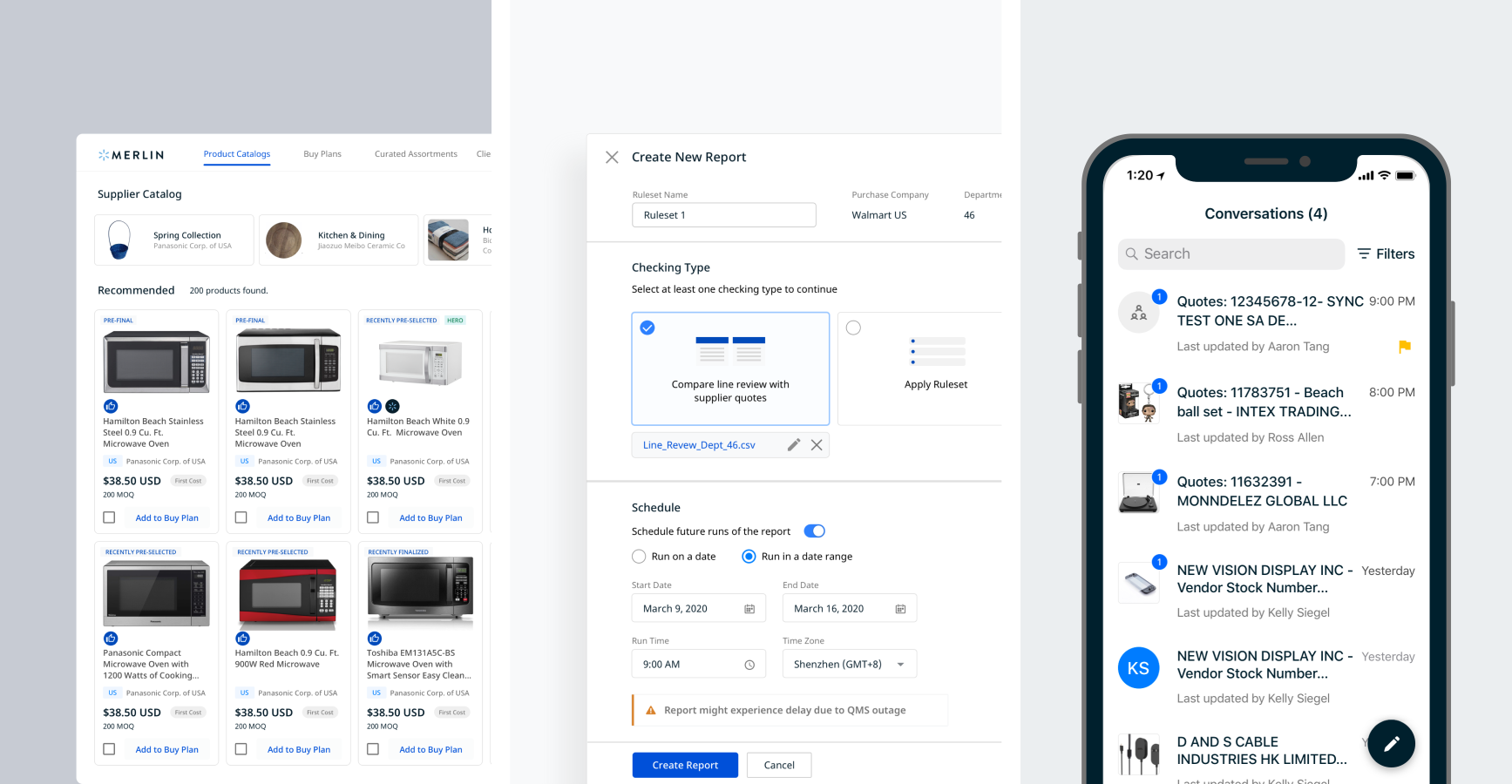
One sourcing operation, three products, six markets
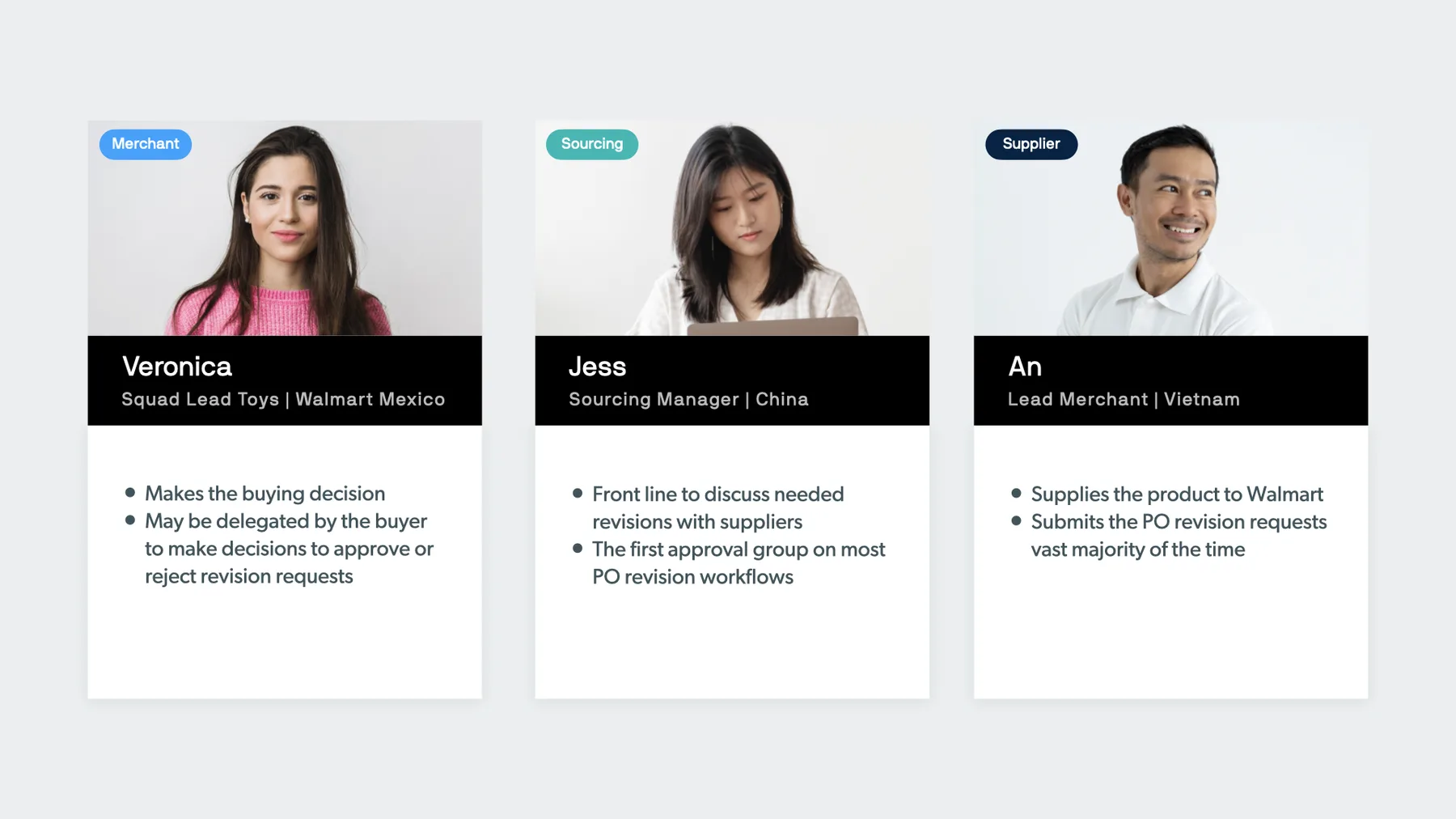
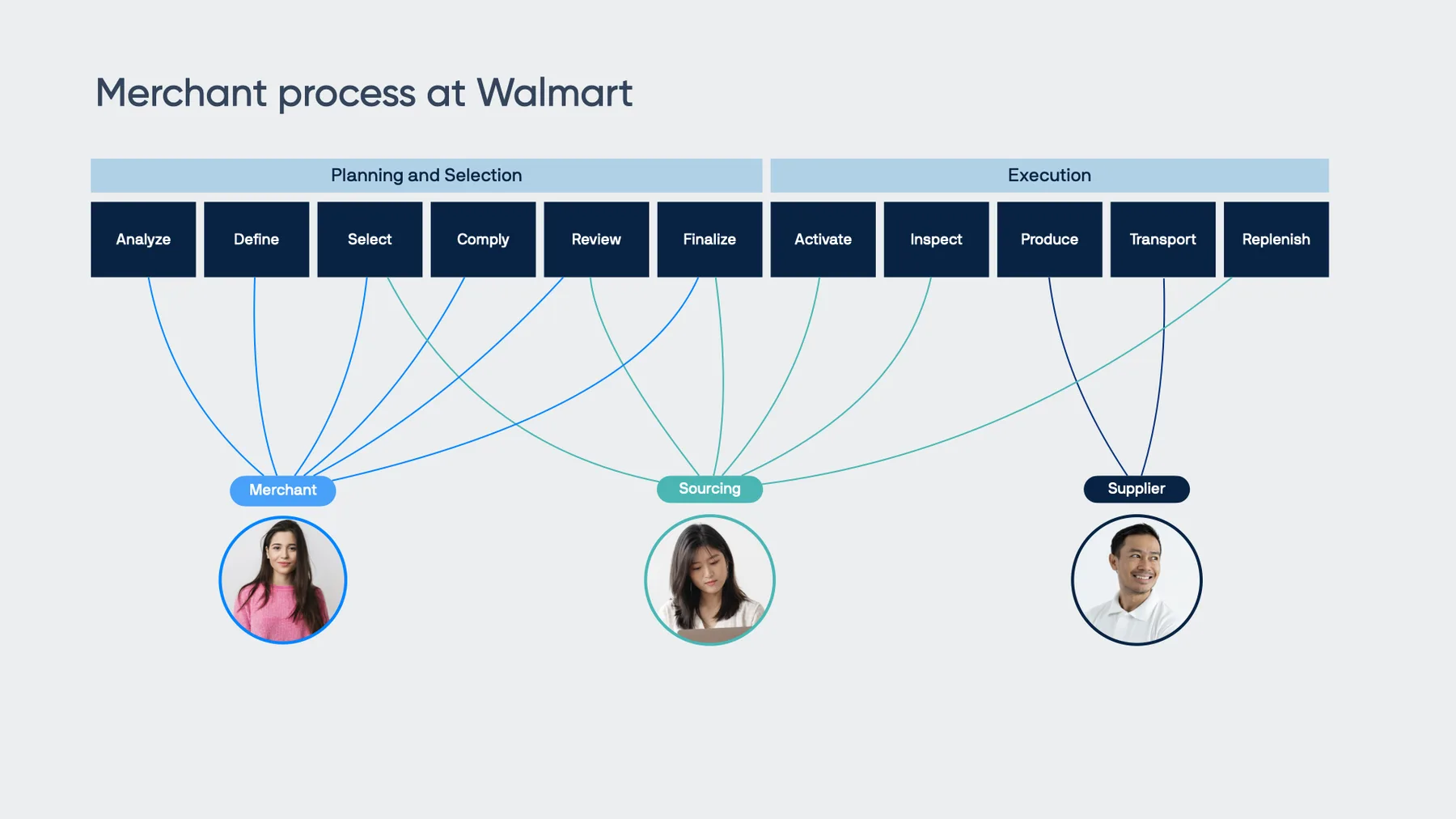
Global Sourcing is how Walmart buys private-brand product from suppliers around the world. Merchants assemble orders, sourcing analysts negotiate and validate quotes, and the whole operation runs across six international markets, each with its own conventions and constraints. The people are different, the data is different, and the stakes — pricing, compliance, containers already in motion — are high.
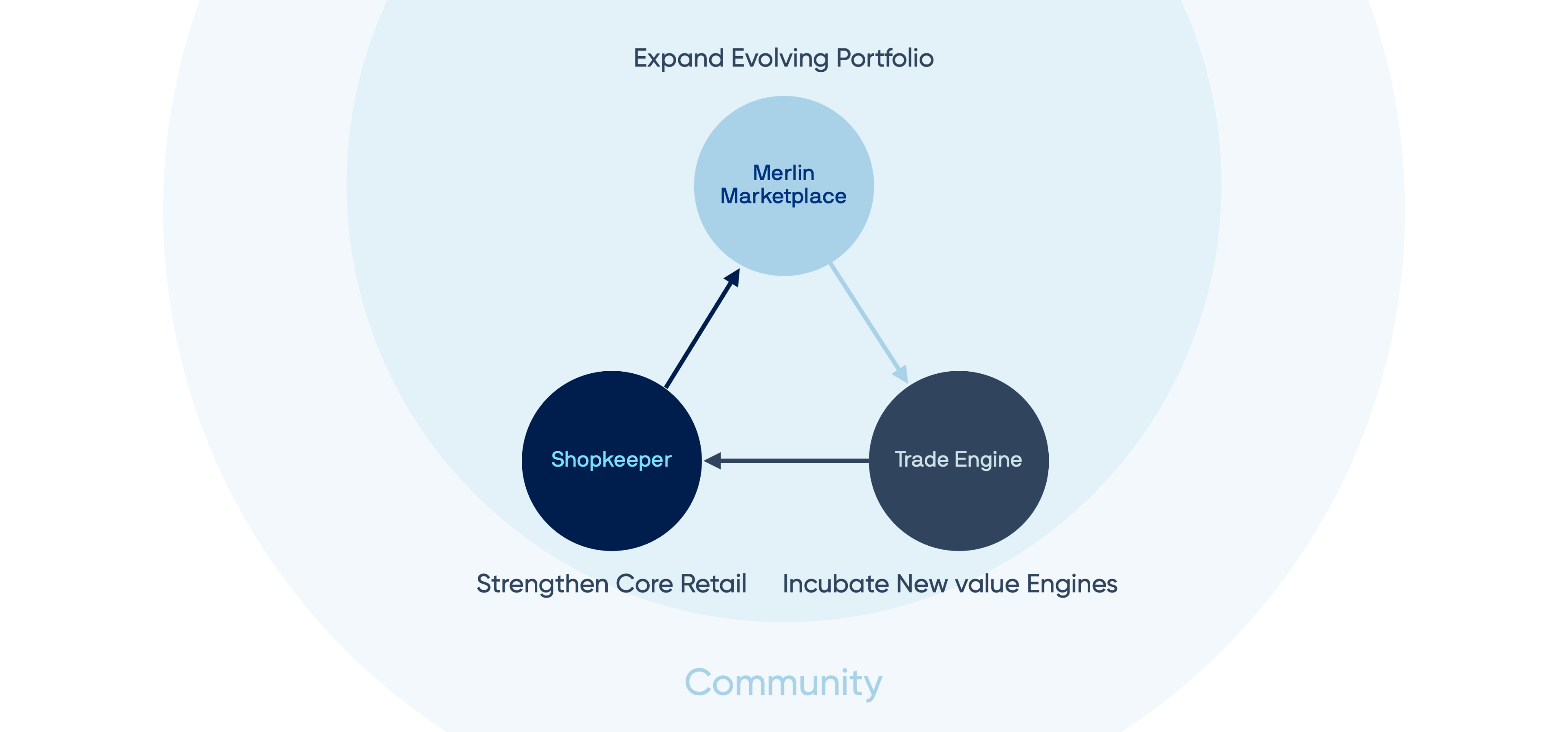
Rather than treat each tool as a standalone screen, I designed for the sourcing operation as a system: Merlin as the marketplace merchants work in, Quote Checking as the validation layer beneath it, and Flip as the communication fabric connecting everyone. Each product solved its own problem, but the leverage came from how they fit together.
Merlin Marketplace — building orders without the friction
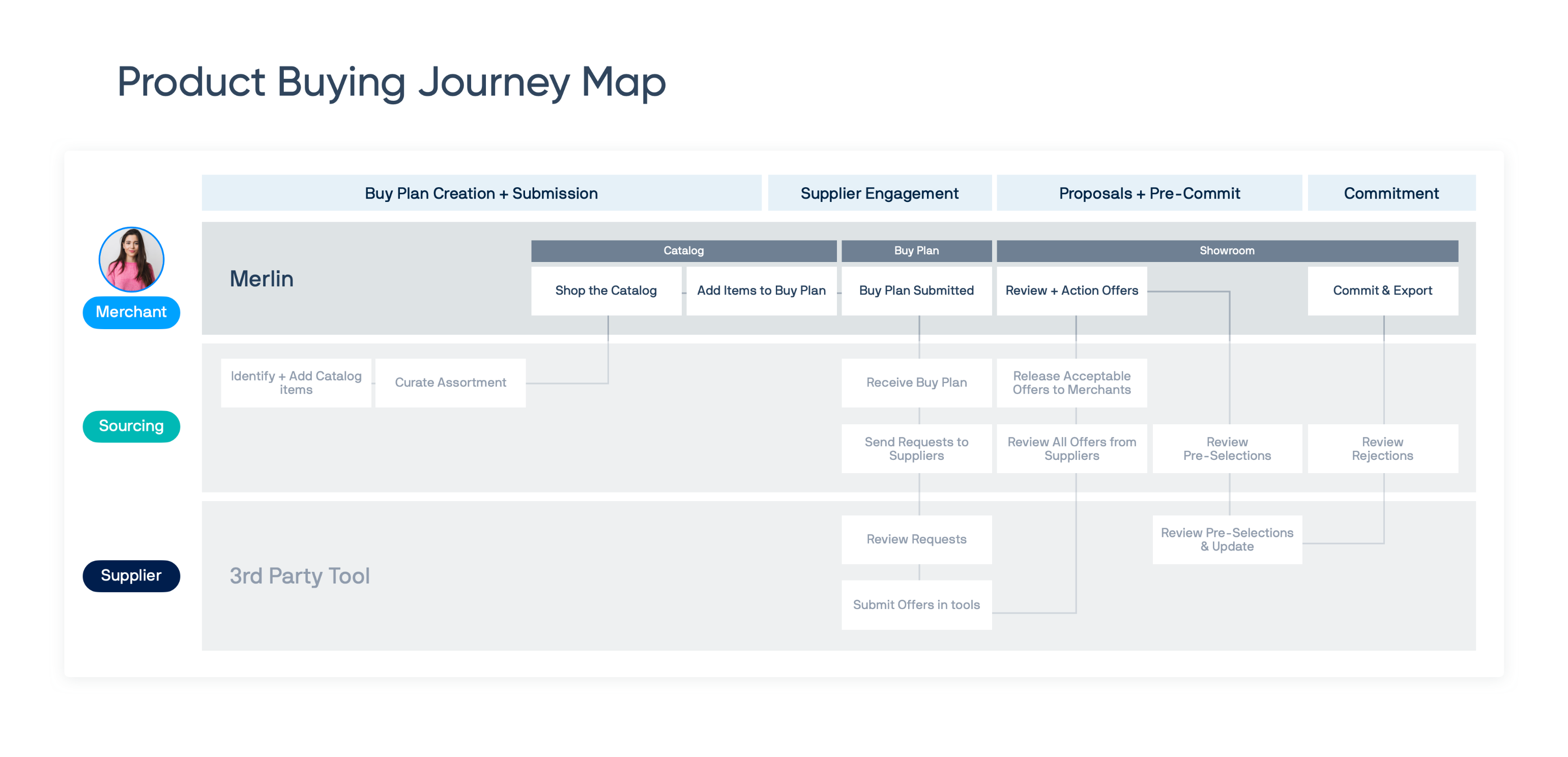
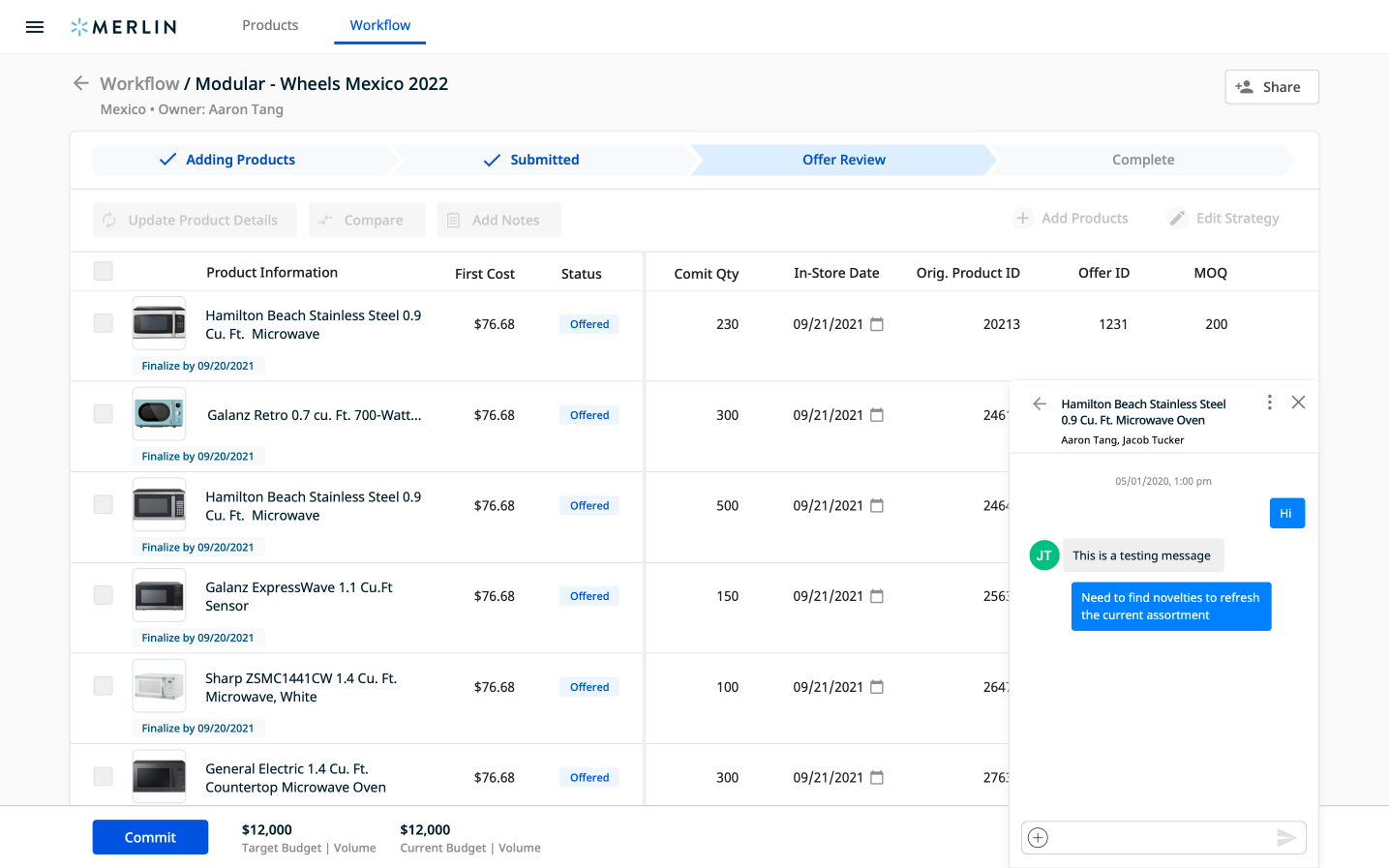
Merlin is the marketplace where merchants select, review, and manage products to build a buy plan. The existing flow made that core job harder than it needed to be, so I mapped the journey end to end and focused on the three places where merchants lost the most time and momentum.
The problems
Cumbersome product-adding process
Getting products into a buy plan took too many steps, and merchants felt every one of them.
High drop-out to submission
Merchants abandoned the flow between selecting products and submitting a buy plan.
Excessive email back-and-forth
Communication between merchants and sourcing lived in email, slow and hard to track.
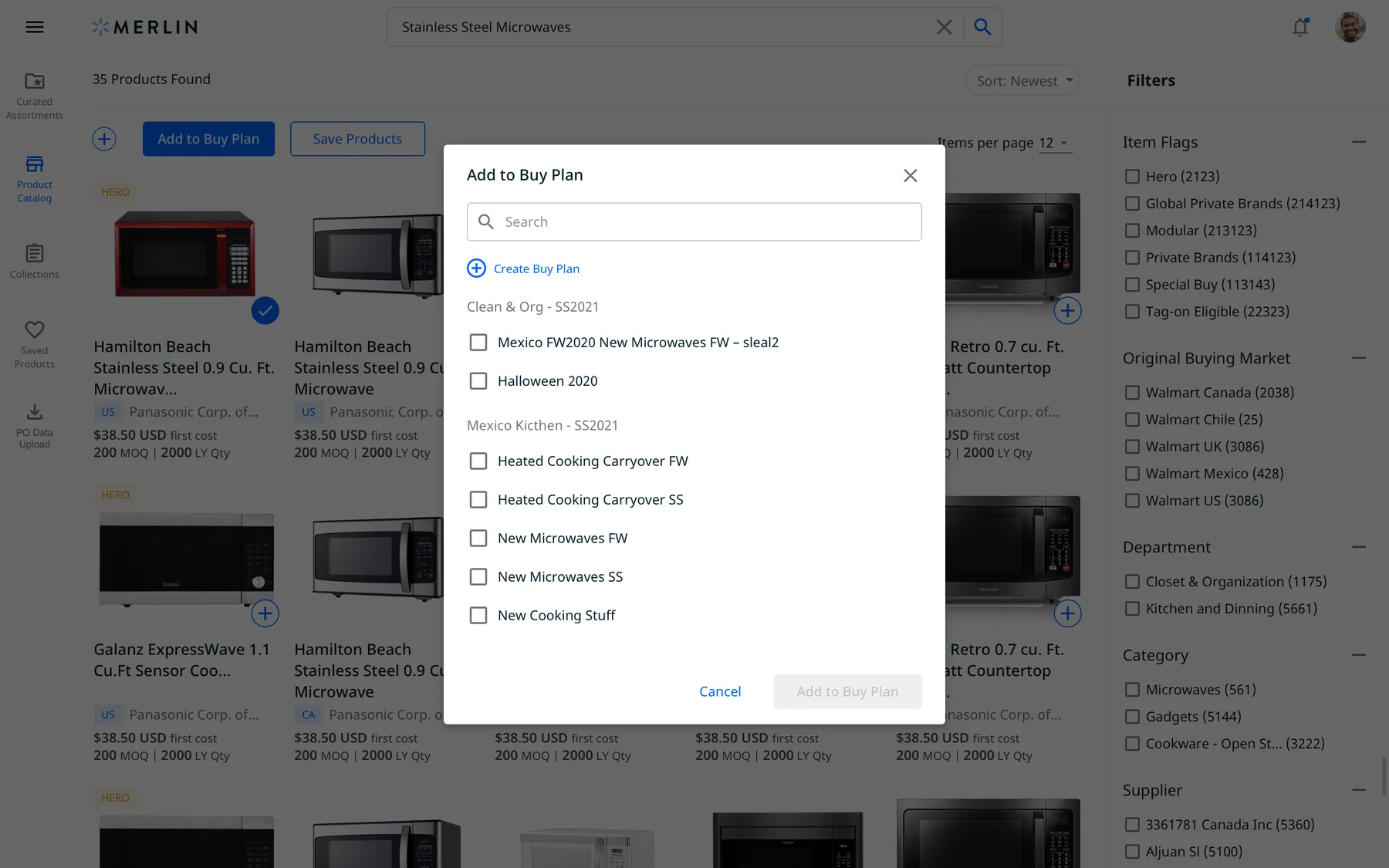
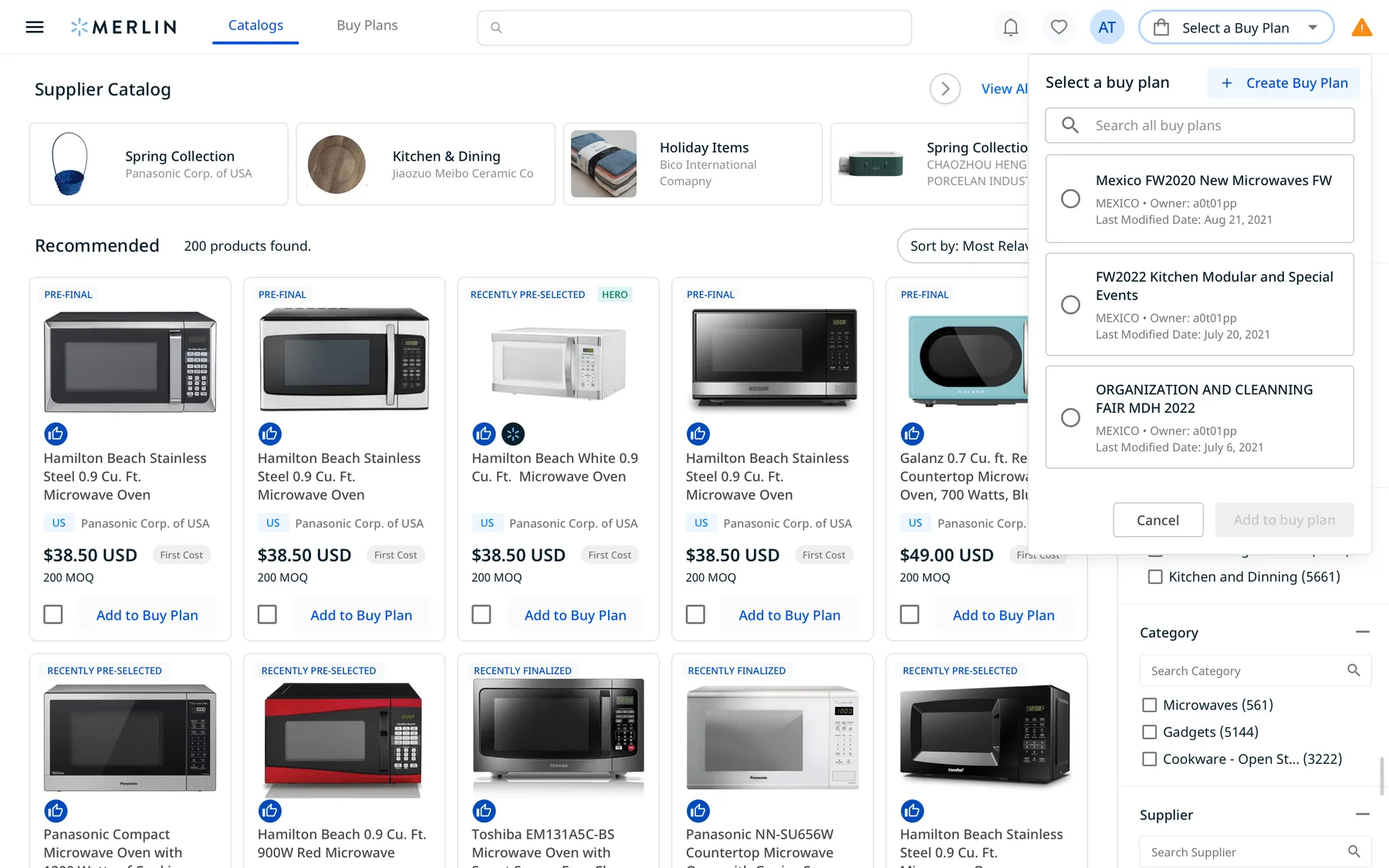
Streamline the product-adding process
I reworked how merchants find and add products to a buy plan, collapsing the repetitive steps into a single, direct flow — driven by what user feedback and behavior told us was actually slowing people down.
Reduce many destinations to one
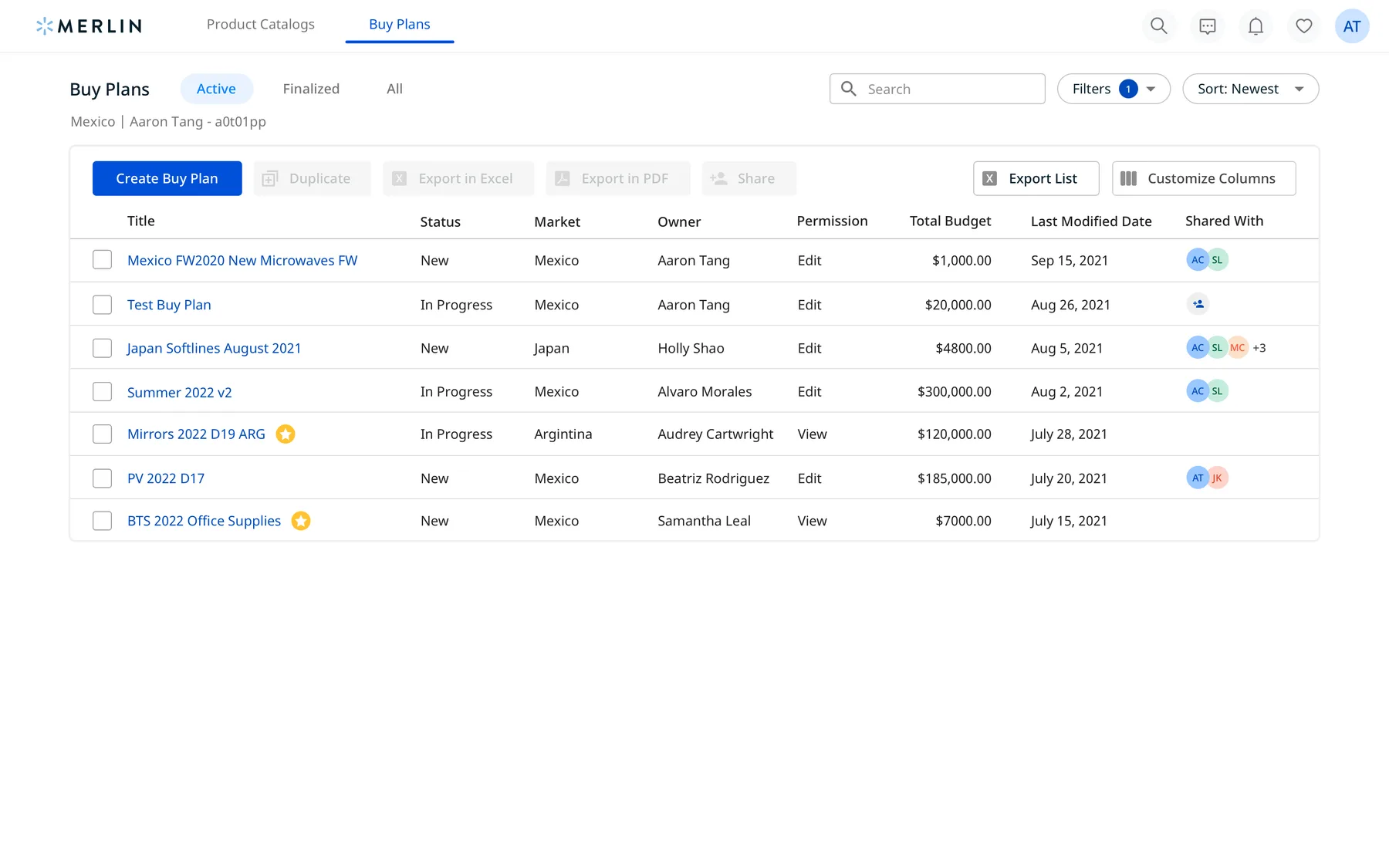
Merchants were bouncing between four navigation options and several layers to finish a task. I added a line-review library where files are uploaded and maintained once, then simply selected when creating a report — cutting the navigation down to two clear options and keeping people focused on the task in front of them.
Leverage what another product already did well
Since I was also designing Flip, I proposed to leadership that Merlin reuse Flip's messaging capability rather than build its own. Merchants could start a conversation around any product in the catalog, and it stayed synced with the Flip mobile app. It was a win-win: Merlin got communication for free, and Flip got a new use case that proved its value as a platform.
85%
time saved versus the previous design
62%
reduction in buy-plan drop-out rate
+30%
increase in system usability score
The lesson stuck with me: there is no such thing as improving one page. Merlin got better because the whole system did.
Quote Checking — validation as infrastructure
Sourcing teams validated supplier quotes and line reviews by hand — analysts eyeballing spreadsheets for pricing errors, missing certifications, and policy violations. I led design for QC-x, the tool that turned that manual review into rule-based, scheduled, auditable checking. Less a screen redesign than a workflow redesign: compliance and exception management for people whose mistakes ship in containers.
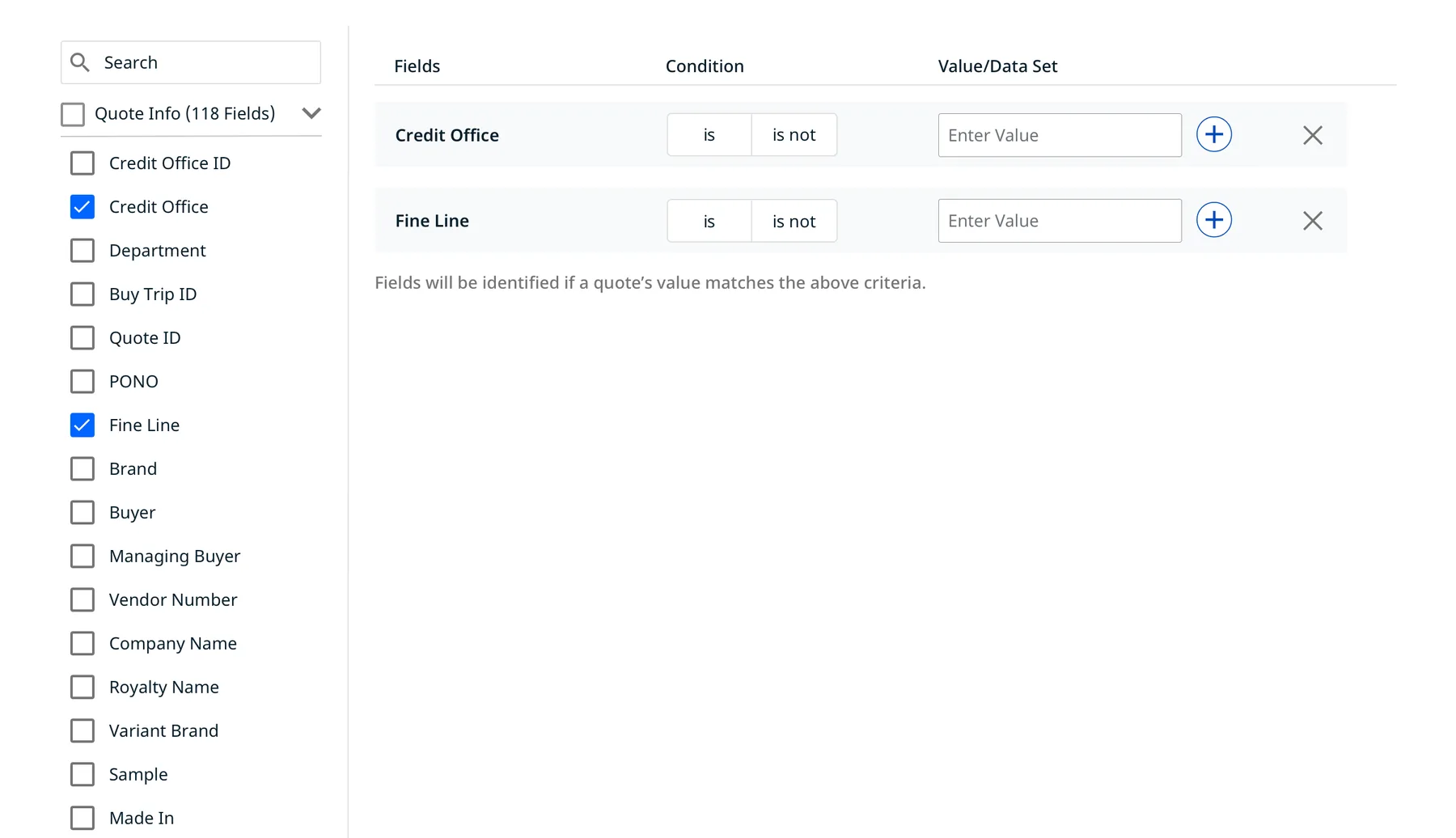
Rules read like policy, not like code
The ruleset builder composes conditions the way an analyst states them — field, comparison, threshold, severity — so the person accountable for a policy is the person who encodes it. No engineering ticket, no translation loss.
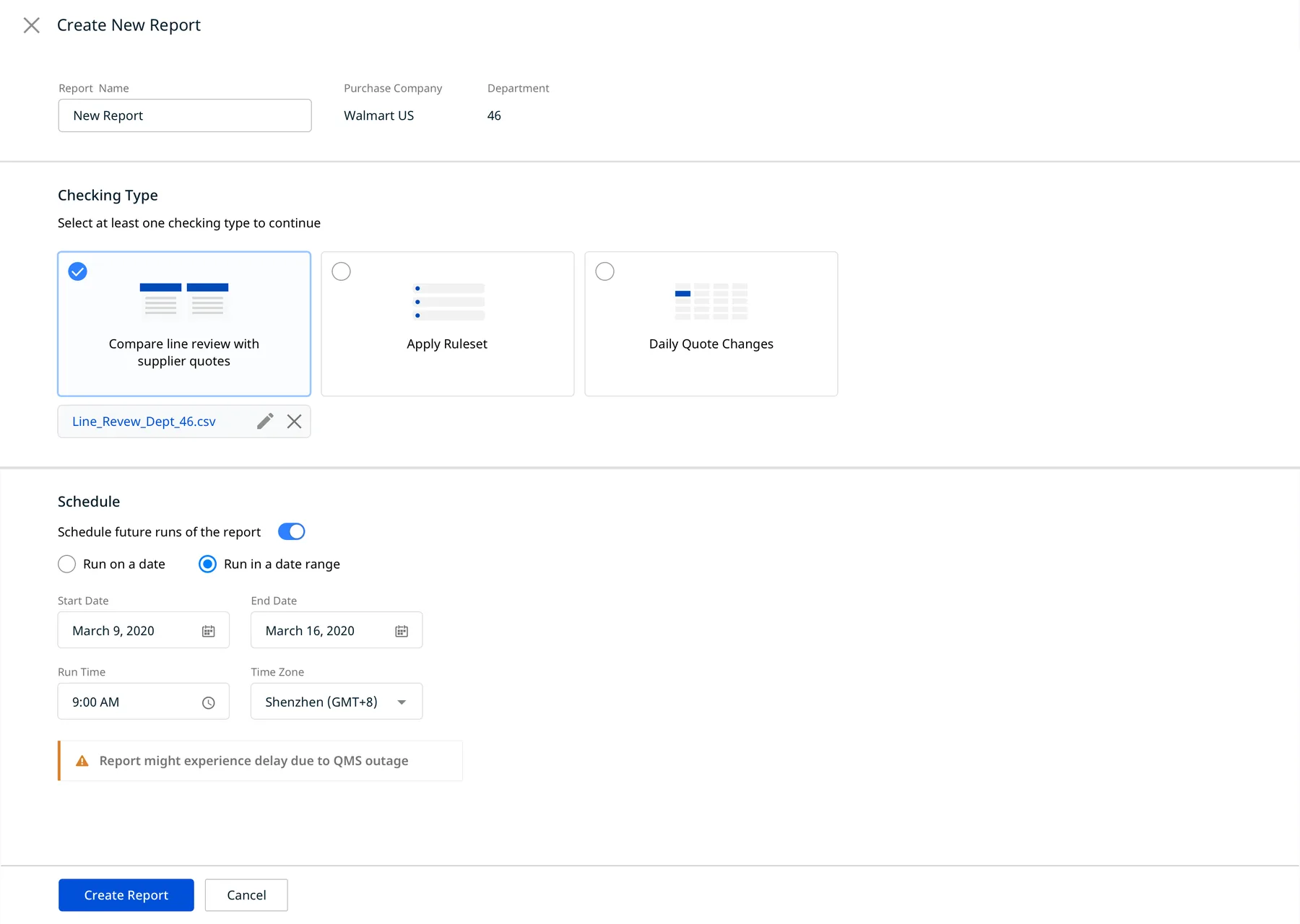
Reports became scheduled infrastructure
Checks run on a cadence against previously uploaded files and land in inboxes with violations grouped by severity. The system does the sweep; humans handle only what it flags.
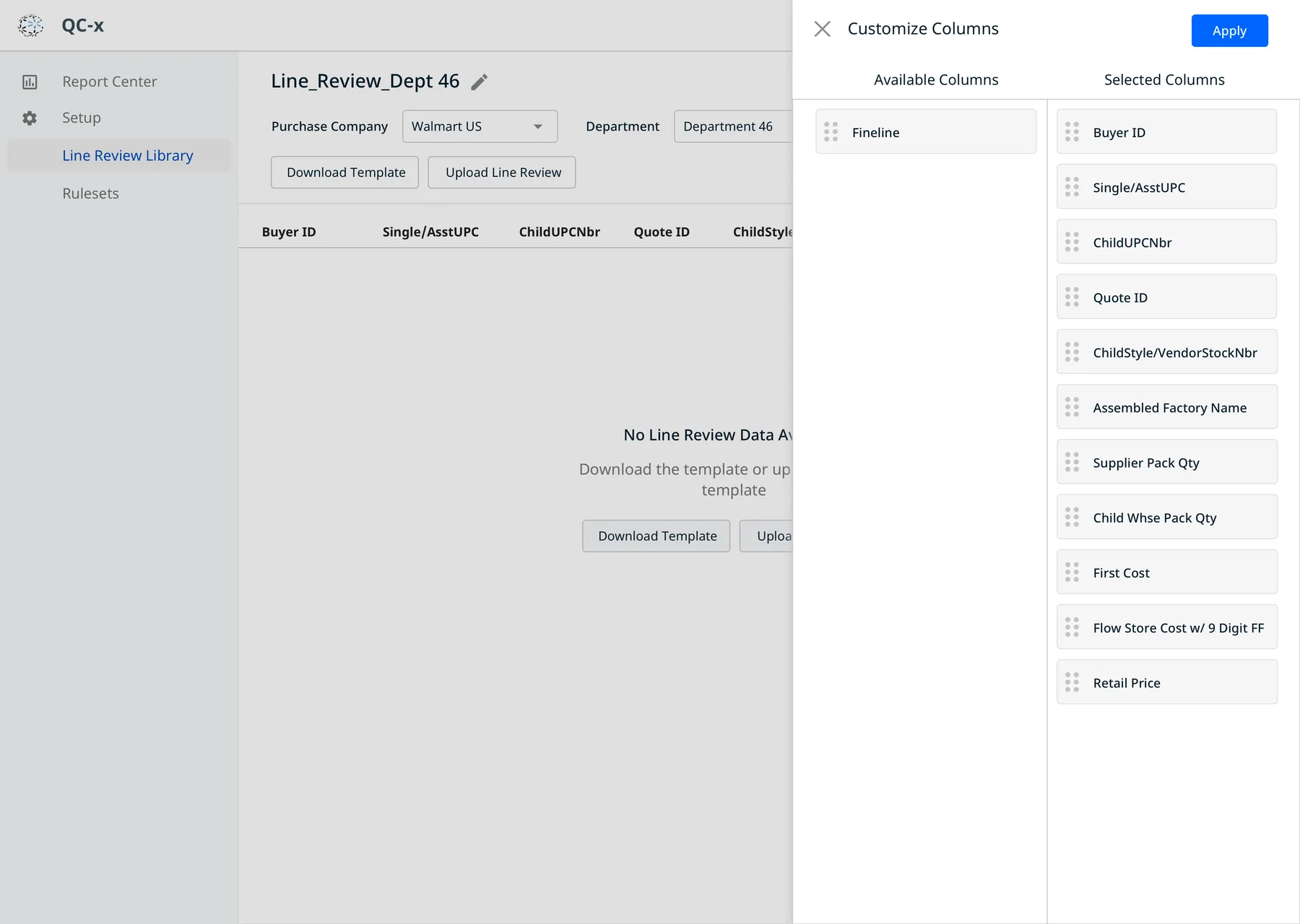
Fixed templates first, customization once trust was earned
V1 shipped fixed downloadable templates because silent mis-parsing in a compliance tool is worse than onboarding friction. Once checking proved its value, I designed template customization in v2 — flexibility on an engine that had earned the trust to absorb it.
Review went from hours of spreadsheet scanning to minutes of exception handling, and every check became documented and repeatable. Read the full Quote Checking case study →
Flip — turning a chat tool into a sourcing platform
I joined Flip at the end of Q2 to improve its cross-platform experience and push it to the next level. As the only designer on a cross-functional team of seven, I owned design end to end and also helped with metric analysis, business-value evaluation, and idea validation. The mandate was blunt: save cost for Global Sourcing operations.
The challenges
Low feature adoption
80% of feature clicks came from just 15% of features — most of the product went unused.
Low satisfaction
The product sat at an NPS of 0 and a steady stream of complaints.
Limited engineering resource
The team spent more time maintaining the system than improving it.
Find the cause of low adoption through a UX evaluation
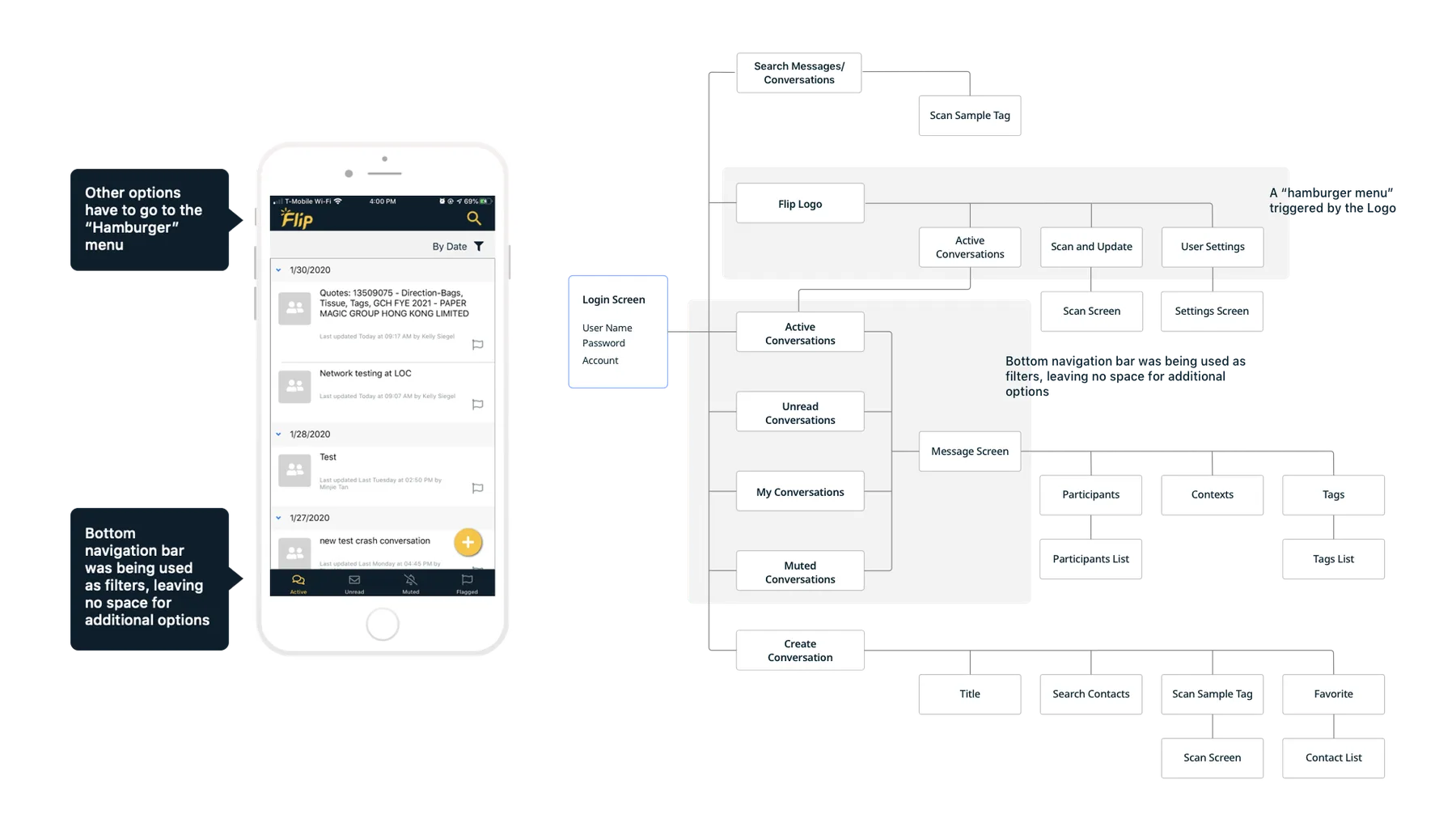
I mapped the product's structure to understand the existing design. The bottom navigation bar was misused, leaving no room for other features — so users had to dig through a hamburger menu to find them. That evaluation set the agenda for the redesign.
Validate ideas early, often, and fast
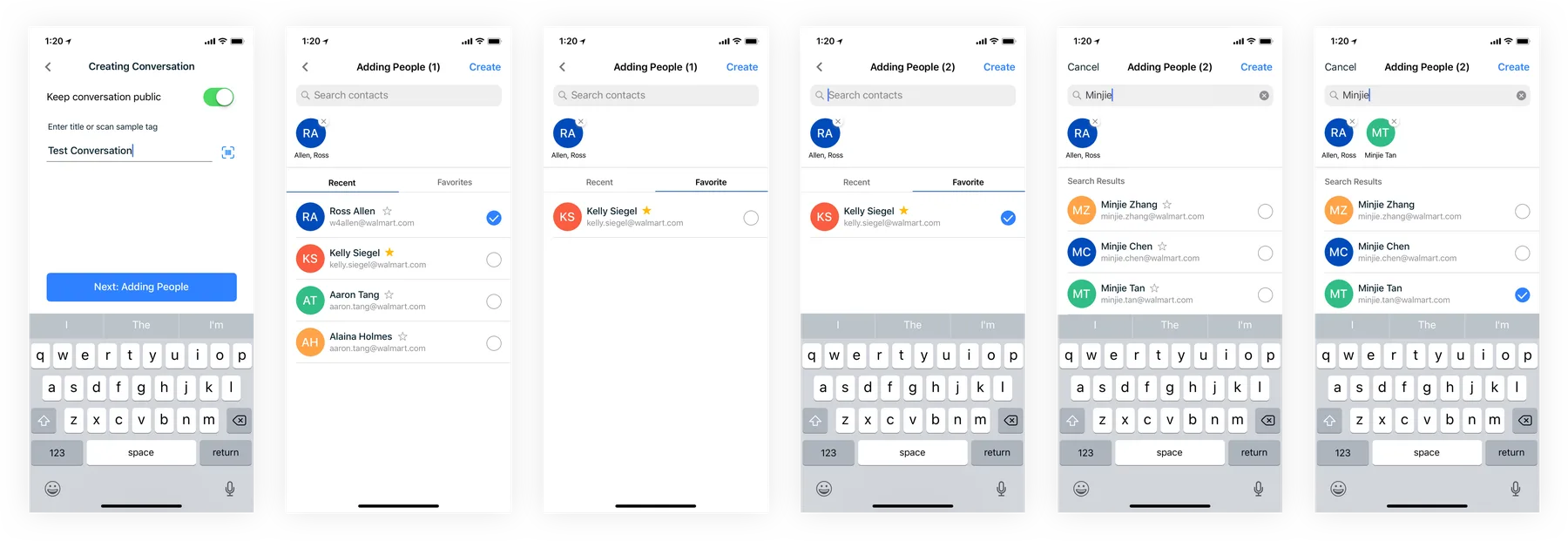
With limited engineering resource, the process had to be lean. We went to users' sites to watch them work, which let us validate ideas, gather feedback, and pivot quickly — including a reworked conversation-creation flow that cut time spent by 20% and brought complaints to zero.
Design a product specialized for sourcing
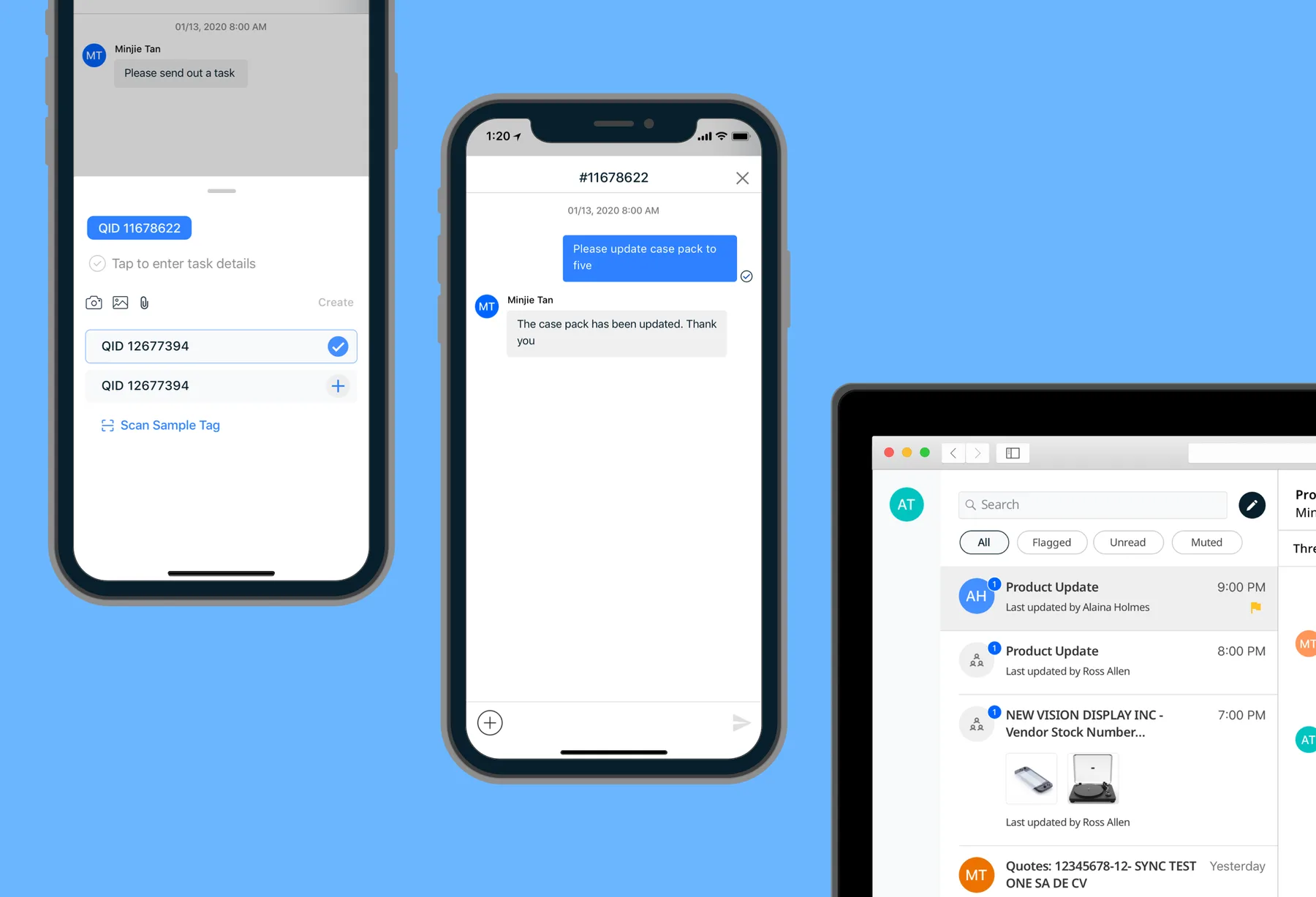
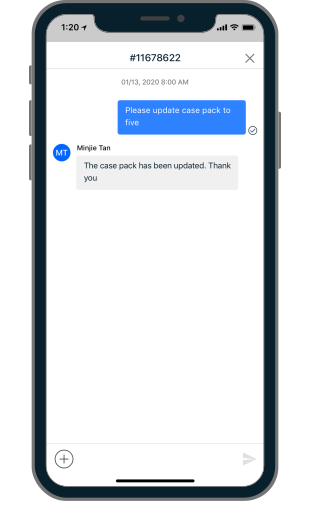
Threading let users keep multiple quotes with the same supplier in one conversation instead of many. Task management let them create and track tasks against a supplier's quotes, replacing a manual process. And aligning to the design system cut design debt and delivered a coherent Walmart experience.
Multiple quotes, one threaded conversation
One consistent experience across platforms
The vision was to move Flip from a tool to a platform — the hub of all sourcing applications. Flip Web brought parity with mobile, and Flip embedded in other products (like Merlin) so communication could happen wherever sourcing work already lived.
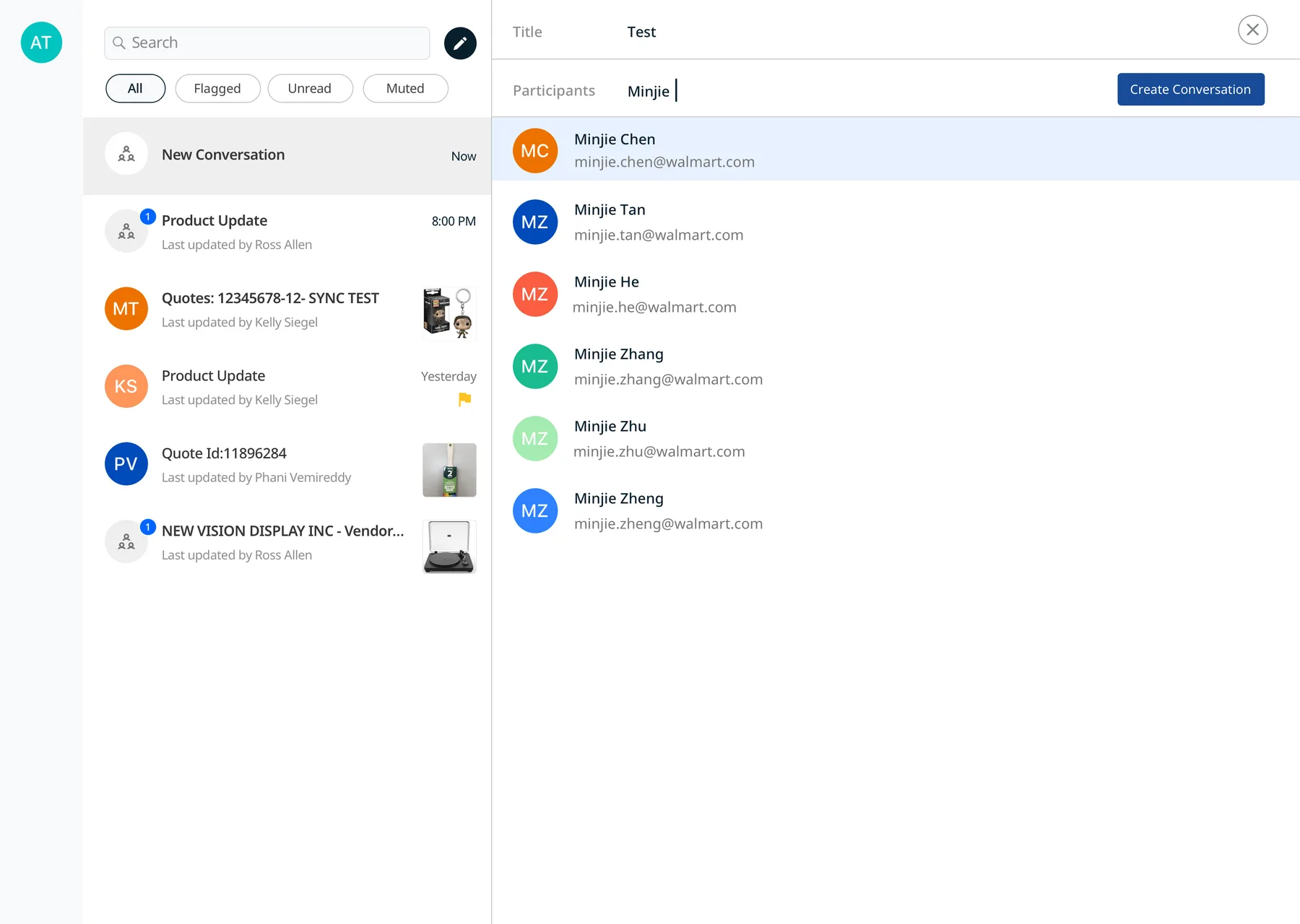
Our vision was to make Flip the hub of all sourcing applications.
What building Global Sourcing tooling taught me
There is no improving one page — only the system
Merlin's numbers moved because the marketplace, the checking layer, and the messaging platform reinforced each other. I learned to optimize for outcomes across products, not screens.
Experiment cheaply so you can fail fast
Half of any team's ideas won't work. Validating assumptions with real users before building — and building the relationships that earn honest feedback — is what made a lean team effective.
Reuse beats rebuild
The Merlin–Flip integration solved two products' problems at once. Looking across the portfolio for leverage, rather than building in isolation, was the highest-return decision I made.